Researchers propose to create materials capable of protein recognition by means of a new technique based on nanosphere lithography.
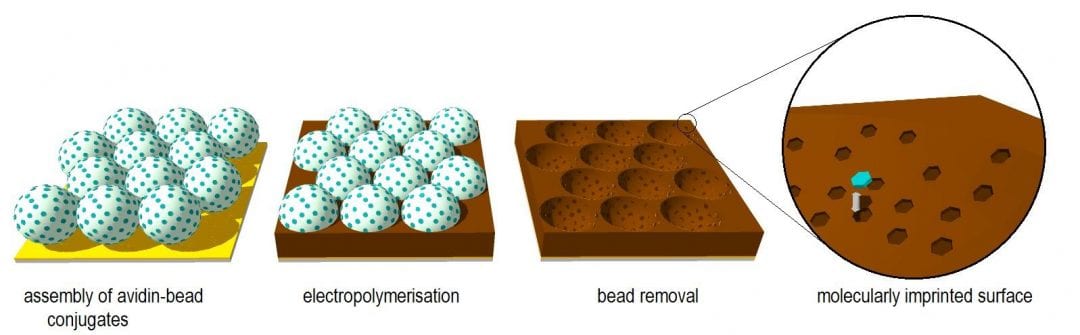

Researchers propose to create materials capable of protein recognition by means of a new technique based on nanosphere lithography.
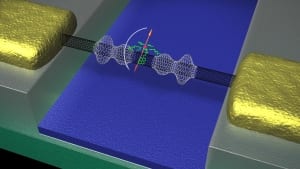
Researchers from the Karlsruhe Institute of Technology and French colleagues from Grenoble and Strasbourg build novel quantum mechanical system.
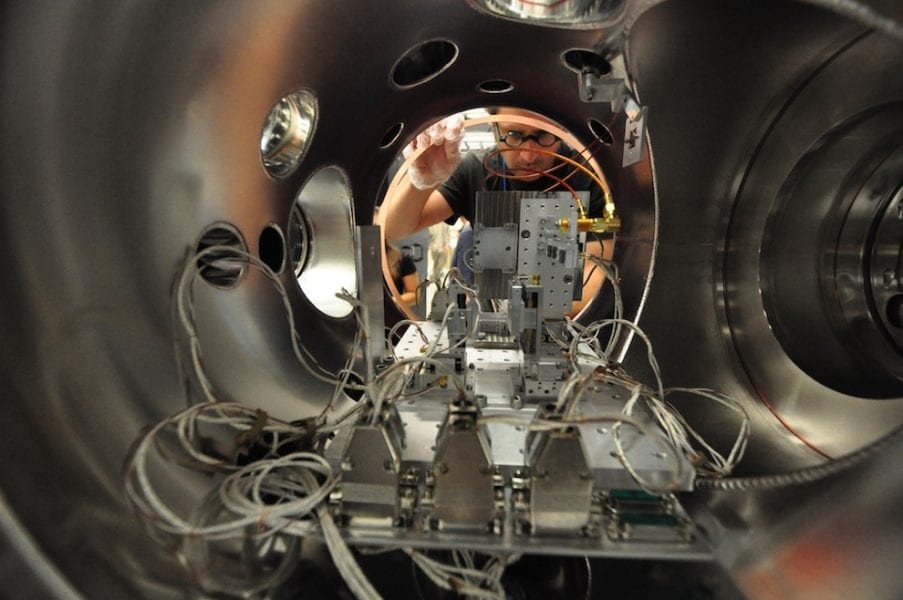
Using laser light to read and write magnetic data by quickly flipping tiny magnetic domains could help keep pace with the demand for faster computing devices.
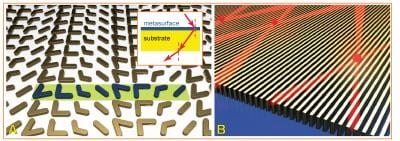
New optical technologies using “metasurfaces” capable of the ultra-efficient control of light are nearing commercialization.
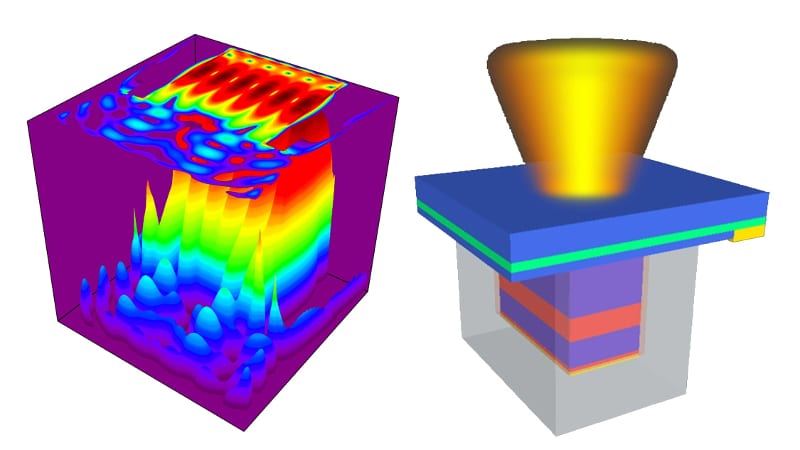
Results pave the way for the use of nanolasers in a variety of practical applications.
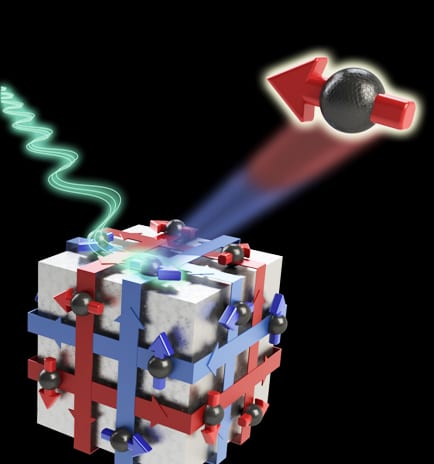
Team find that when TIs are hit with a laser beam, the spin polarization of the electrons they emit can be completely controlled in three dimensions.
Completly new camera „ImagEM X2“ featuring a back-thinned electron-multiplying CCD sensor (EM-CCD) with even faster speed than previous „ImagEM“ cameras. The new camera offers maximum speed and precision performance for low-light imaging.
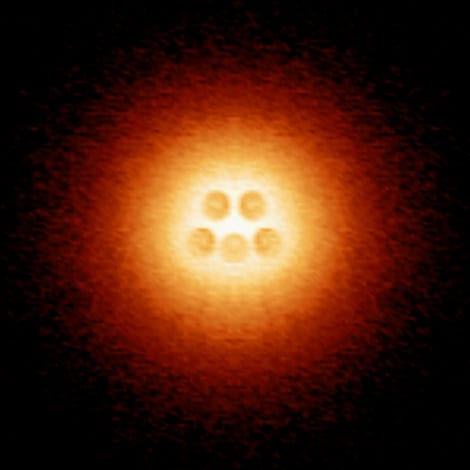
Atomic collapse state recreated with artificial nuclei by Berkeley Lab researchers.
New study examines how bacteria clog medical device, to shape strategies for preventing clogging of devices such as stents.
Carbon nanowires have been obtained by tempering diamantane dicarboxylic acid inside carbon nanotubes.
 New theory suggests gravity is not a fundamental force
 Higgs boson may be driving the Universe’s expansion
 Water-powered gadgets may be on the horizon thanks to new evaporation-based energy device
 Scientists discover a new class of antibiotics
 Micron-sized hidden dimensions could solve two of physics’ deepest puzzles
 A new type of dark matter could explain mysterious radiation from the Milky Way’s core