This month’s top 5 most read articles from Advanced Optical Materials.


This month’s top 5 most read articles from Advanced Optical Materials.

Biocompatible, biodegradable and porous LC elastomers were used as viable, soft scaffolds for cell growth and proliferation in a spatial (3D) fashion.
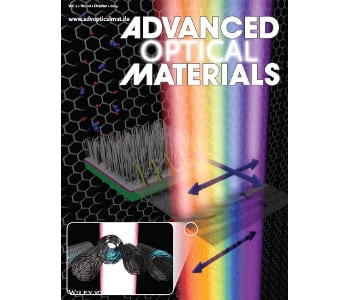
Check out the articles highlighted on the covers of the latest issue of Advanced Optical Materials.

Work is underway at BAE Systems to give aircraft human-like ‘skin’, enabling the detection of injury or damage.
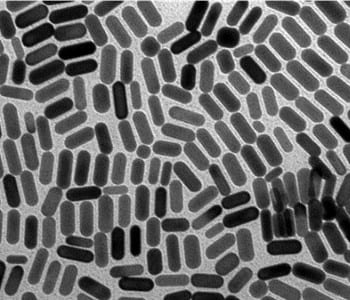
Chinese group develop a novel nanofiber-array sensor and experimentally demonstrate its potential in the detection and sizing of single nanoparticles.

Recent work reports the use of a magnetic graphene oxide-iron oxide nanoparticle nanocomposite to fabricate an MRAM operating at room temperature.

Researchers have demonstrated a novel microfluidic method to pattern organic films directly in air.

Takao Someya talks about his new role as an Advanced Electronics Materials Editorial Board member, his research priorities, and future applications of flexible electronics.
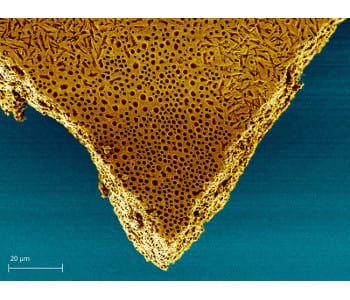
A membrane that can lift 20 times its own weight when it comes into contact with a solvent vapour has been developed by a German/Chinese team.
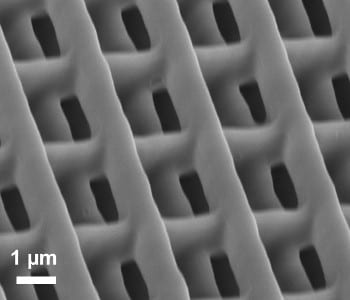
A team at the University of Central Florida has developed an alternative route for functionalizing polymers using water-based chemistry.
 New theory suggests gravity is not a fundamental force
 Higgs boson may be driving the Universe’s expansion
 Water-powered gadgets may be on the horizon thanks to new evaporation-based energy device
 Scientists discover a new class of antibiotics
 Micron-sized hidden dimensions could solve two of physics’ deepest puzzles
 A new type of dark matter could explain mysterious radiation from the Milky Way’s core