Random branching theory enables the modelling of the solution structure of randomly hyperbranched polymers.
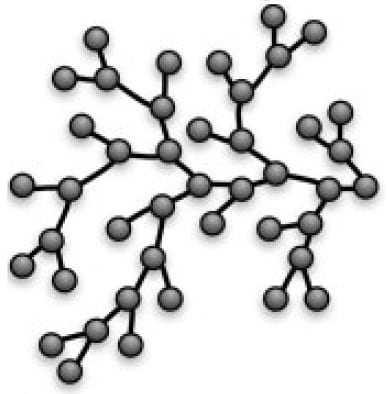

Random branching theory enables the modelling of the solution structure of randomly hyperbranched polymers.
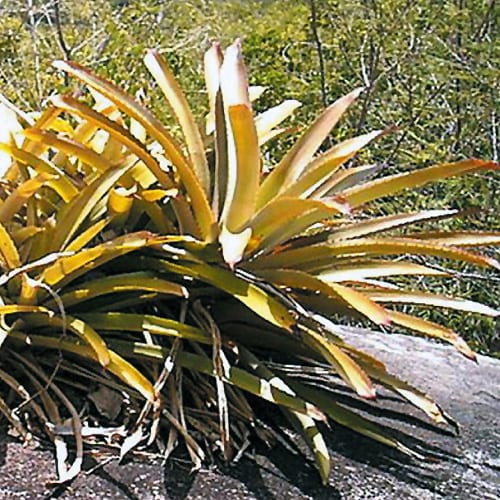
Brazilian scientists have studied the water absorption in unsaturated polyester composites reinforced with macambira fiber.

Luminescent solar concentrators might hold the key to turning everyday building components into energy-generating devices.

Shot peening enhances the surface characteristics of parts in aircraft engines. Researchers from Rolls-Royce and the University of Kassel tried to find the optimal set of parameters.

Dr. Ming Qiu Zhang of Zhongshan University, author of “Self-Healing Polymers and Polymer Composites,” talks to MaterialsViews about self-healing and other scientific challenges.
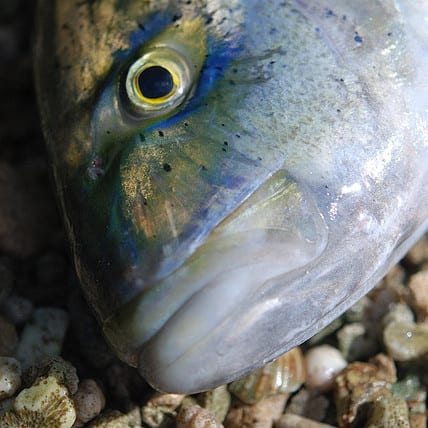
Fish aren’t just for eating; their scales could also act as an excellent protective material, say a group of researchers.

Former Air Products and Chemicals senior researcher Francis Waller discusses intellectual property for today’s chemist.
Nominations for the third Polymer International – IUPAC Award, celebrating the achievements of young researchers in the polymer community, will close on October the 31st.
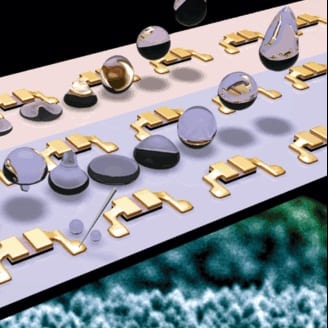
The development of nanostructured ZnO components for devices could lead to inherently waterproof electronic devices.
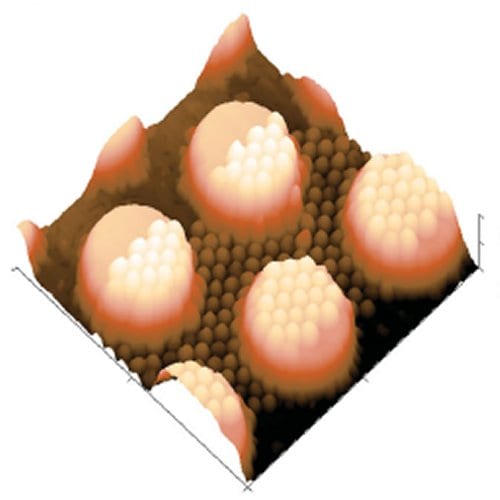
Nanosized features can easily be printed accurately onto an already patterned surface, using a new technique called nanoimprinting by melt processing.
 New theory suggests gravity is not a fundamental force
 Higgs boson may be driving the Universe’s expansion
 Water-powered gadgets may be on the horizon thanks to new evaporation-based energy device
 Scientists discover a new class of antibiotics
 Micron-sized hidden dimensions could solve two of physics’ deepest puzzles
 A new type of dark matter could explain mysterious radiation from the Milky Way’s core