A new hybrid catalyst technology with reduced platinum content delivers lower system costs and improved ORR activity, stability, and fuel cell performance.
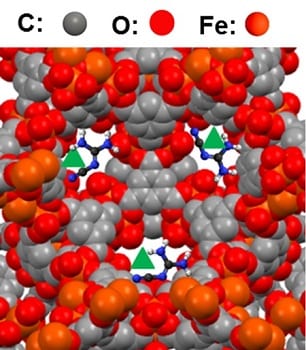

A new hybrid catalyst technology with reduced platinum content delivers lower system costs and improved ORR activity, stability, and fuel cell performance.

Check out the articles highlighted on the covers of the latest issue of Advanced Optical Materials.
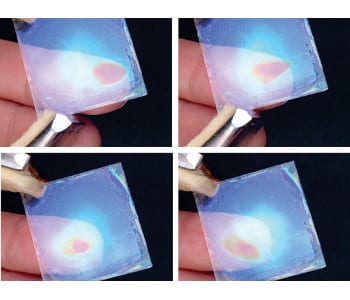
A new sensor technology could enable touchless displays that respond to moisture emitted by the human body.
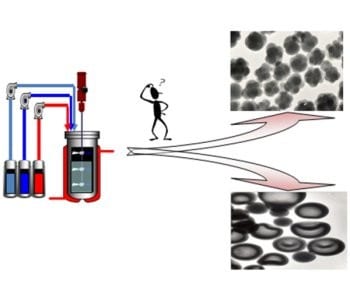
Spanish researchers review the knowledge-based production of waterborne hybrid polymer materials
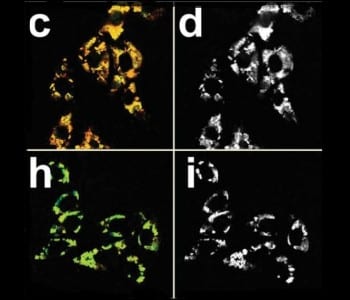
An Ir-complex modified nanoprobe to sensitively monitor hypoxia in cancer cells without interfering autofluorescence is developed.

Low concentrations (10 × 10−15 M) of the disease biomarker microRNA-21 (miRNA-21) can be detected by a flexible biosensor.
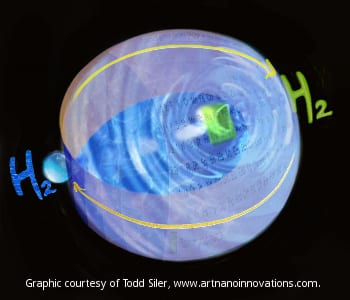
In his latest piece, Professor Ozin considers the possibility of basing a future hydrogen economy on platinum catalysts.
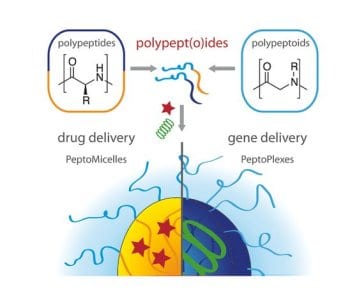
Matthias Barz and Kristina Klinker provide a first overview concerning the work on polypept(o)ides.
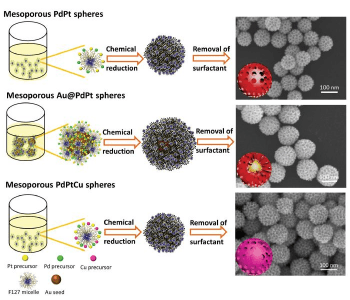
A facile, green, and tunable synthesis for mesoporous spheres consisting of noble metals is developed. The spheres are potential catalysts in fuel cells.
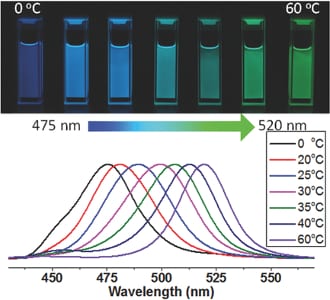
New research published in Advanced Science by a team of Chinese researchers presents the control of the emission color of CH3NH3PbBr3 perovskite quantum dots using precipitation temperature.
 New theory suggests gravity is not a fundamental force
 Higgs boson may be driving the Universe’s expansion
 Water-powered gadgets may be on the horizon thanks to new evaporation-based energy device
 Scientists discover a new class of antibiotics
 Micron-sized hidden dimensions could solve two of physics’ deepest puzzles
 A new type of dark matter could explain mysterious radiation from the Milky Way’s core