“It seems like the whole world is working on solar cells; trying to make them better, cheaper and safer to cope with the looming global energy drought.” Professor Geoffrey Ozin talks about the current state of solar cell research.

“It seems like the whole world is working on solar cells; trying to make them better, cheaper and safer to cope with the looming global energy drought.” Professor Geoffrey Ozin talks about the current state of solar cell research.
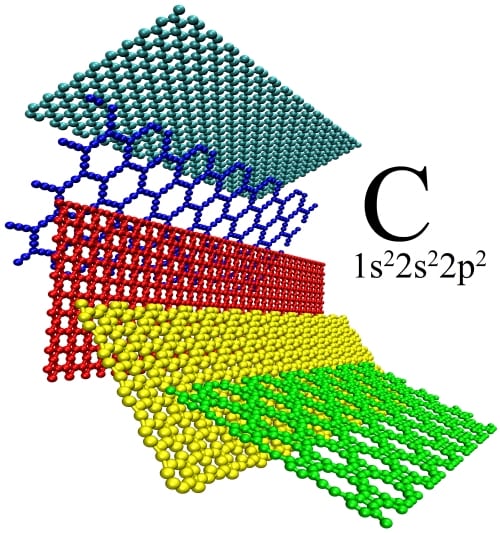
A set of twelve graphene-like materials is simulated regarding their stability, structural, and electronic properties.
Progress towards multifunctional biomedical applications for silica-based nanoparticles is described by Prof. Taeghwan Hyeon
Professor Geoffrey Ozin gives us his thoughts on nanochemistry and photonic metamaterials.
Prof. Andrey Rogach, Prof. Dmitri Talapin and Dr. Elena Shevchenko look back on 10 exciting years of nanocrystal superstructures.
Chitin-silicon dioxide nanocomposite made by self-organization and sol-gel chemistry.
The sample size of nanomaterials with functional properties has been limited to just a few millimeters. This fact has limited their commercial use, so far.
Professor Rod Ruoff, nanoscience researcher at the University of Texas, on his work, his life, and how his knees got him into chemistry…
University of Southern Mississippi scientists imitated Mother Nature by developing a new, skinny-molecule-based material that resembles cilia, the tiny, hair-like structures through which organisms derive smell, vision, hearing and fluid flow.
A simple way to create very small patterns on a surface by using a mixture of top-down and bottom-up technology has been developed. Self-assembly is combined with evaporation to make highly ordered nanoscale structures.
 New theory suggests gravity is not a fundamental force
 Higgs boson may be driving the Universe’s expansion
 Water-powered gadgets may be on the horizon thanks to new evaporation-based energy device
 Scientists discover a new class of antibiotics
 Micron-sized hidden dimensions could solve two of physics’ deepest puzzles
 A new type of dark matter could explain mysterious radiation from the Milky Way’s core