Team find that when TIs are hit with a laser beam, the spin polarization of the electrons they emit can be completely controlled in three dimensions.
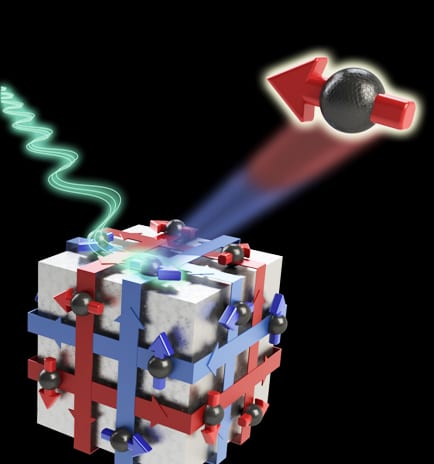

Team find that when TIs are hit with a laser beam, the spin polarization of the electrons they emit can be completely controlled in three dimensions.
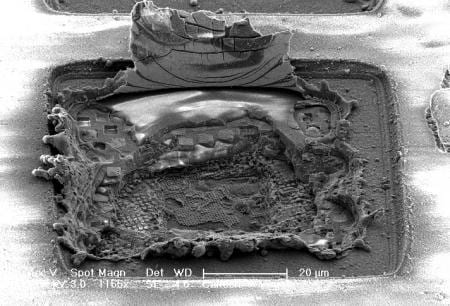
High-Speed Integrated Circuits laboratory team demonstrated this self-healing capability in tiny power amplifiers.
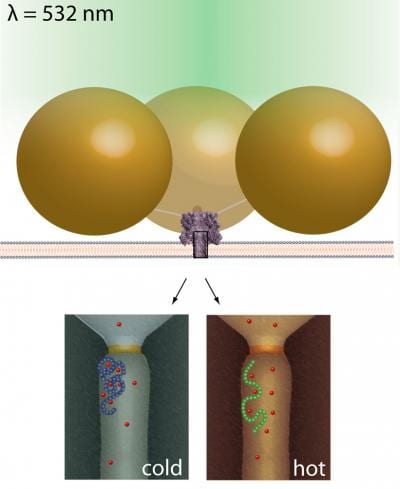
Chambers can be used for the detection and identification of a wide range of molecules, including DNA.
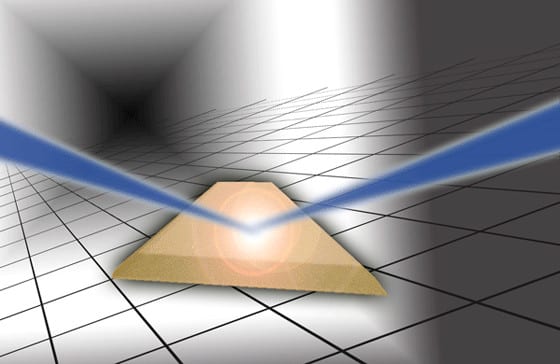
Scientist observe the impact of subtle changes in the electron distribution of a crystal on its atomic structure on ultrashort time scales.

We talk to Professor Christopher Barner-Kowollik, head of the Macromolecular Architectures group at the Karlsruhe Institute of Technology.
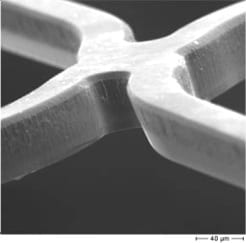
German researchers present a new micro-machining method to fabricate micropatterned superelastic TiNi films.
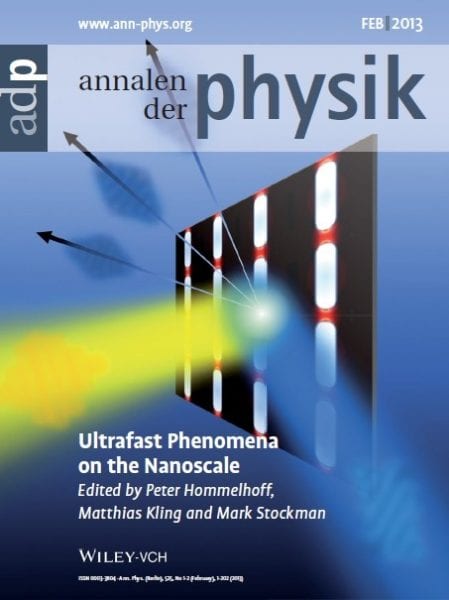
Ultrafast physics and nanoscale research are two emerging scientific fields that mate very well.

The 2013 Prism Awards for Photonics Innovation were announced at this year’s SPIE Photonics West in San Francisco.
Method allows direct detection of rapid fluctuations that may help to explain how high-temperature superconducting materials work.

The second issue of Advanced Optical Materials is now online, including twelve research articles covering all aspects of light-matter interactions.
 New theory suggests gravity is not a fundamental force
 Higgs boson may be driving the Universe’s expansion
 Water-powered gadgets may be on the horizon thanks to new evaporation-based energy device
 Scientists discover a new class of antibiotics
 Micron-sized hidden dimensions could solve two of physics’ deepest puzzles
 A new type of dark matter could explain mysterious radiation from the Milky Way’s core