Device monitors microcystin-LR, a cyanobacterial toxin, in sources of drinking water supplies using carbon nanotube arrays.
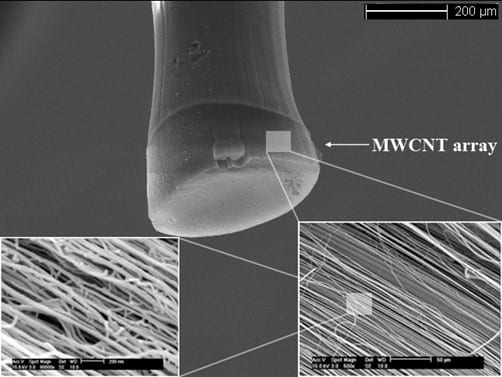

Device monitors microcystin-LR, a cyanobacterial toxin, in sources of drinking water supplies using carbon nanotube arrays.
Researchers are aiming to develop a new class of materials with remarkable properties using one atom-thick substances such as graphene in a new collaborative project.
University of Wollogong researchers have printed materials which can actuate and strain gauge.

What would it take for you to replace your old-fashioned candles with modern LEDs this Christmas time?
A research group partly financed by the Swiss National Science Foundation has been researching the perfect composition of Portland cement.
Goal is to develop new catalysts to lower costs for producing biofuels.

Renewable energy could fully power a large electric grid 99.9 percent of the time by 2030 at costs comparable to today’s electricity expenses.
Materials will be marketed by Altuglas International as Plexiglas/Altuglas Rnew biopolymer alloys.
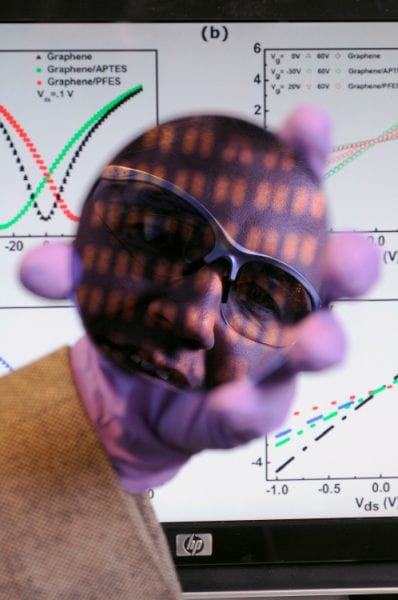
Researchers create junctions, essential to electronics fabrication, by transferring graphene films onto patterned monolayer substrates.

The 2012 Fall Meeting of the Materials Research Society (MRS) took place in Boston, Massachusetts, USA, from November 25 to November 30.

 Micron-sized hidden dimensions could solve two of physics’ deepest puzzles
 Turning Periods into Power: Menstrual Blood a Valuable Resource for Medical Diagnostics
 Surfactants Steer Supraparticle Structure
 Bone loss in obesity traced to gut microbiota
 Edible electronics realize safe, complex monitoring devices
 Fermilab Confirms Muon g-2 Measurements