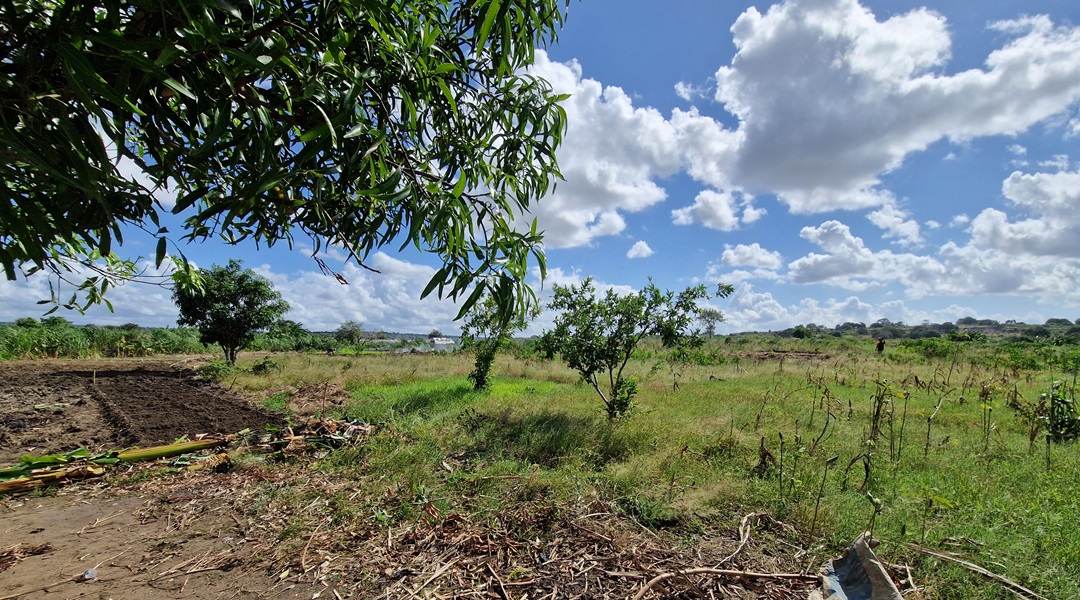
Mozambique has abundant renewable resources and millions of hectares of arable land. Yet much of its agricultural potential remains untapped.
Researchers from the University of Bologna are collaborating with local farmers and the International Association of Lay Volunteers (LVIA), an NGO operating across Africa, to turn local agricultural waste into practical, affordable solutions that address both water and energy challenges.
Turning waste into opportunity
Rural communities in Mozambique face limited access to clean water and reliable energy, which has a ripple effect on daily life. Without energy, pumps and irrigation systems cannot operate, and without water, agricultural growth stalls.
“Climate change is also making rainfall more unpredictable, increasing risks to food security,” says Francesca Valenti, a professor in the University of Bologna’s Department of Agricultural and Food Sciences who led the study.
In Nampula, Mozambique’s most populous province, most households rely on firewood for energy, which contributes to deforestation, Valenti said. But as a major agricultural center, Nampula also produces large amounts of agricultural residues — the plant material left in fields after harvest — that can be reused for local energy production, as fertilizer to improve soil quality, and to reduce dependence on firewood.
To determine how to best access this potential, the team interviewed small processing enterprises and smallholder farmers growing crops such as maize, cassava, millet, cashews, beans, and rice in Nampula. They asked farmers about their water use, energy needs, and agricultural waste.
Each interview was linked to GPS coordinates, and the information was processed using geographic information system (GIS) software to create maps showing where farms are located, how much they produce, where residues are available, and where water and energy needs are the most critical.
“By combining spatial mapping with interviews and field surveys, we were able to capture small farms, informal activities, and everyday practices that are not officially recorded,” Valenti says.
She also points out that conventional studies that rely mainly on national statistics or satellite data can miss important local details.
“This approach connects technical maps with people’s lived experiences, making the results more realistic and useful for planning on the ground.”
Why identifying biomass–water mismatches matters
From heat maps generated using GIS software, the researchers identified spatial mismatches between biomass availability, water demand, and infrastructure. Agricultural waste is widely available but unevenly distributed: some water-stressed areas produce large amounts of biomass, while less stressed areas produce less.
“These mismatches matter because even well-designed technologies can fail if they are placed in the wrong location,” Valenti explains. “For example, a bioenergy system will not work effectively where there is little available agricultural waste or poor access to resources.”
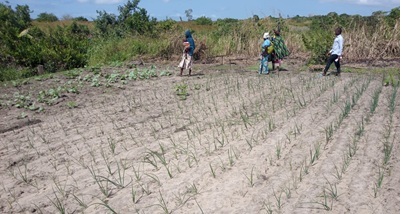
Designing interventions that are in line with these resource imbalances can help planners and engineers move away from ‘one-size-fits-all’ solutions and towards those that actually match local resources and needs.
If energy technologies are located far away from the available resources, or if resource distribution is not taken into account, the sustainability of the whole process is reduced, Valenti says.
“For example, additional transport and logistics are required to collect the waste, leading to higher costs and higher carbon dioxide emissions, which can undermine the environmental benefits of resource recovery,” she adds.
According to Valenti, small-scale, decentralized solutions, such as biogas systems, composting, or integrated water–energy hubs that communities can manage locally, are the most promising solutions.
But proper planning can only go so far. With limited investment, lack of technical skills, and poor coordination between the water, energy, and agricultural sectors, implementing these solutions is challenging. For these reasons, Valenti stresses that solutions need to be low-cost, user-friendly, and supported by community training and involvement.
“Treating agricultural waste as a resource — rather than a problem — can support more inclusive, climate-resilient rural development,” she says.
Reference: Giuseppe Mancuso et al., Spatial Analysis of Agricultural Waste and By-Products to Tackle the Water–Energy Nexus in Rural Mozambique. Global Challenges (2025). DOI: 10.1002/gch2.202500339
Image credits: Copyright for all images used for this article is held by the authors of the relevant reference, 10.1002/gch2.202500339