
Geoff Ozin asks if carbon dioxide capture and utilization, a potential solution to the CO2 problem, is feasible with today’s photo-conversion technology.
Results for "climate change"

Identifying the Global Coal Industry’s Water Risks
The water–energy nexus is becoming one of the great challenges of our generation—one that also holds significant implications for all.

Book Review: Nanotechnology in eco-efficient construction
Professor Onuegbu Ugwu of the University of Nigeria reviews Nanotechnology in eco-efficient construction.
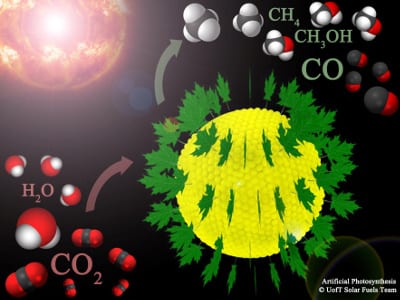
A Fossil Fuel Free World
Professor Ozin explores the repercussions of giving up our fossil fuel addiction.
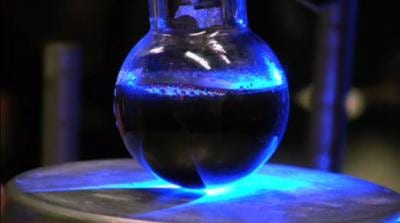
The next step towards large-scale artificial photosynthesis
Berkeley Lab researchers identify key intermediate steps in artificial photosynthesis reaction.

Welcome our new Advanced Materials Editorial Advisory Board member Prof. Jillian Buriak
Jillian Buriak talks about her fascination of investigating the nanoworld, multidisciplinary applications of nanomaterials, and future trends in the exciting field of materials science.
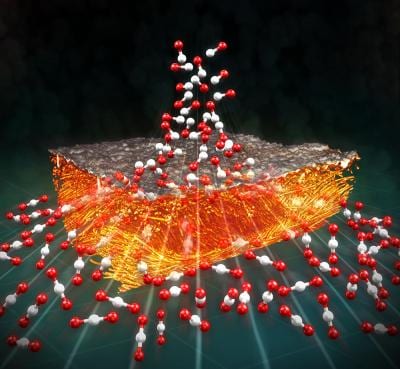
Optimizing electrodes with new analytical methods
Micro-computed X-ray tomography and microfluidic-based electrochemical analysis give new insights into into electrode structure-performance relationships.
A new porous material for carbon capture
Chemists at USF and KAUST have discovered a more efficient, less expensive and reusable material for carbon dioxide (CO2) capture and separation.
MOF material improves carbon dioxide scrubbing
Material investigated by USF and KAUST chemists could be a breakthrough in developing new tools for cleaner air and energy production.
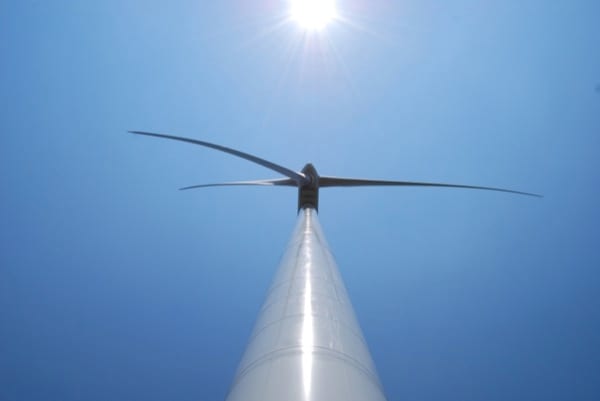
Wind, solar power paired with storage could be cost-effective way to power grid
Renewable energy could fully power a large electric grid 99.9 percent of the time by 2030 at costs comparable to today’s electricity expenses.
Popular
-
 New theory suggests gravity is not a fundamental force
-
 Higgs boson may be driving the Universe’s expansion
-
 Water-powered gadgets may be on the horizon thanks to new evaporation-based energy device
-
 Scientists discover a new class of antibiotics
-
 Micron-sized hidden dimensions could solve two of physics’ deepest puzzles
-
 A new type of dark matter could explain mysterious radiation from the Milky Way’s core