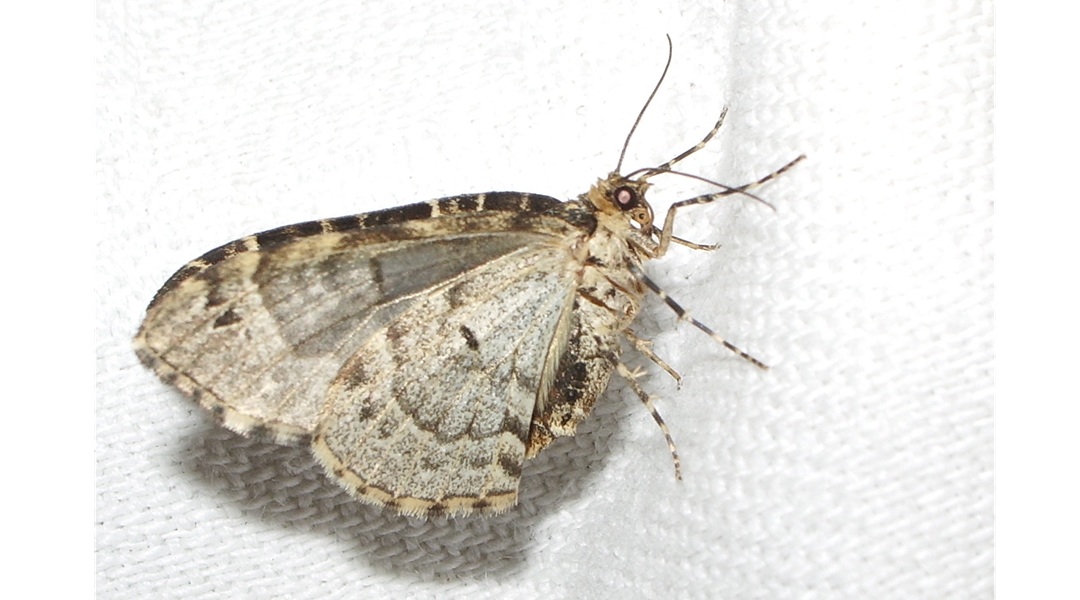
Inspired by the natural structure of moth eyes, scientists have developed a lightweight fabric that can detect radiation, warn users of exposure risks, and provide over 99% X-ray shielding efficiency.
This material could be used in applications ranging from safety monitoring in medical diagnostics to underground exploration and nuclear emergency response. In all these settings, this new type of fabric could provide a more practical and affordable alternative to the heavy protective clothing used today.
“Conventional X-ray protective garments are typically composed of lead-based materials, which, although capable of providing shielding efficiencies greater than 99%, are often inflexible and uncomfortable,” stated Huan Pang, professor of chemistry at Yangzhou University. “The use of lead also raises concerns about health and the environment.”
Until now, no flexible radiation shields were able to also offer real-time alerts for X-ray leakages. With a design that mimics the unique structure of nocturnal insects, Pang and colleagues have created the first fabric to integrate both functionalities into a single material. “There is an urgent need in both medical and industrial fields for the development of flexible protective materials that combine effective radiation shielding with real-time warning capabilities,” said Pang.
Moth eye structure is perfect for shielding materials
Moth eyes are covered in microscopic bumps, each just a few nanometers wide. Because each bump is smaller than the wavelength of visible light, this structure prevents the reflection of incoming light, helping moths—and other insects with similar eyes—to see in the dark. These natural properties previously inspired the development of anti-reflective, anti-glare films used today in glass coatings, solar panels and contact lenses among other applications.
Pang and colleagues have taken this concept a step further by replicating moth eye structures to make a material that is flexible, transparent, resistant and that remains stable even in harsh conditions.
Commercial radiation detectors are typically expensive, require external power, and cannot detect lower doses of radiation. Instead, the researchers opted for using scintillators, materials that emit light when hit by radiation, which produce a visible signal even at low exposure levels but tend to be very rigid and therefore are difficult to integrate into fabrics. “Conventional flexible scintillators often sacrifice either performance or stability,” said Pang.
The team chose a rare-earth compound that glows green after being irradiated with low X-ray doses. On its own, this material is sensitive to external conditions such as humidity and light exposure, and it is naturally very rigid and brittle.
To overcome these limitations, the researchers created silica nanospheres that coated the rare-earth material in powder form. When laid together flat on a plastic base, these nanoparticles replicated the microscopic structure of moth eyes, creating a flexible film that blocks 99.8% of X-ray radiation, matching the shielding power of a 0.35mm-thick sheet of lead.
Stable X-ray shielding performance
The resulting fabric is resistant to water, acids and alkalis, remaining stable without losing performance even in harsh environments. Following radiation exposure, the material glows for up to 20 hours, allowing leakages to be detected long after they start.
Pang envisions this fabric being used across a wide range of applications, including making protective clothing for nuclear emergency responses or transparent screen covers used in X-ray imaging equipment to warn users of any leakages. He concludes: “This work provides a foundation for developing next-generation protective technologies across medical, industrial, and defense sectors.”
Reference: Yuansheng Jiang et al., Moth-Eye-Engineered Flexible Films for X-Ray Shielding and Persistent Radiation Warning, Advanced Science (2025). DOI: 10.1002/advs.202514035
Featured Image Credit: “Moth” by Smabs Sputzer (1956-2017) via Flickr, CC BY 2.0