The first-ever FDA-approved medication for Phelan-McDermid syndrome (PMS), a subtype of autism, is scheduled to start phase 1 clinical trials next year. This breakthrough is expected to accelerate the development of drugs for autism spectrum disorder (ASD).
According to 2022 data from the Autism and Developmental Disabilities Monitoring Network, an estimated 1 in 31 children have autism spectrum disorder, a number that has been growing since 2000.
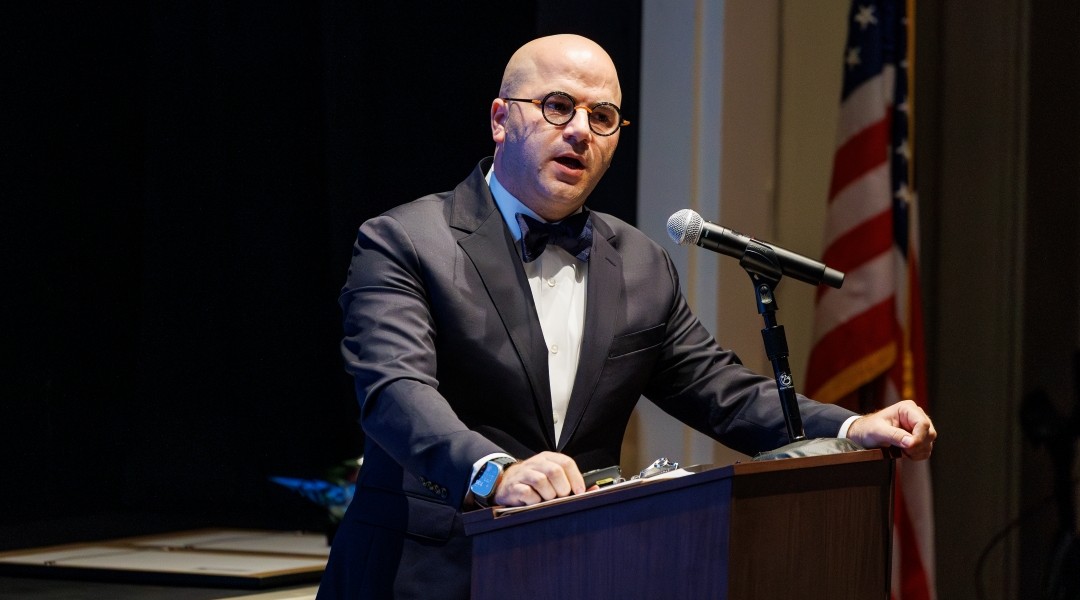
Leading the new small-molecule drug’s development is Haitham Amal, an associate professor in the Faculty of Medicine at the Hebrew University of Jerusalem, and currently a visiting professor at the Rosamund Stone Zander Hansjoerg Wyss Translational Neuroscience Center at Boston Children’s Hospital, which is affiliated with Harvard Medical School.
Taken orally, the medication, a nitric oxide inhibitor, directly affects the pathological mechanisms of ASD, treating the core symptoms of autism. Antipsychotic drugs such as risperidone and aripiprazole have been used off-label for symptom management, but they can cause significant side effects.
In 2023, Amal and his team reported that ASD is linked to the brain’s abnormal production of nitric oxide, a major finding that made waves in the international news. Since then, he co-founded NeuroNOS, a company developing small-molecule drugs to treat ASD and other neurodevelopmental and neurological disorders. Amal and his team filled us in on what he and his team have been working on in the meantime.
What led you to develop a drug for ASD?
I started working on the role of nitric oxide in autism at the Massachusetts Institute of Technology (MIT). The story starts there, in 2015. For my postdoctoral fellowship, I was in Steven Tannenbaum’s lab, who was among the first to show that nitric oxide is produced in our cells, and collaborated with Guoping Fang at the McGovern Institute for Brain Research.
We published a paper in Molecular Psychiatry. This was the first paper to show a correlation between nitric oxide and autism, but it didn’t show any causal effect.
When I returned to Hebrew University, I started showing the causal link between nitric oxide and ASD, discovering a novel mechanism. Right now, most researchers are looking at the same systems, such as the serotonergic, GABAergic and glutamatergic ones. Our small-molecule concept is based on selective neuronal nitric oxide synthase. Our goal is to reduce nitric oxide production in the neuronal subtype. We showed [in two mouse models of ASD] that there is an overproduction of nitric oxide as a consequence of genetic mutations. That leads to an alteration of signaling pathways [in the brain], such as mTOR signaling, autophagy, and other mechanisms.
What are small-molecule drugs?
NeuroNOS has two different small molecule drugs—one for autism and Phelan-McDermid syndrome (PMS)—and now we’re targeting Angelman syndrome and Rett syndrome [two other neurodevelopmental disorders]. The other small-molecule drug is for glioblastoma, neuroblastoma, and different kinds of cancers.
You’ve recently been granted orphan drug designation from the Food and Drug Administration (FDA). What does this designation mean?
It’s a signature from the FDA that tells us they believe in what we are doing, and they appreciate the results that we submitted. It gives a company the privilege of accelerated drug approval. We received orphan drug designation for PMS, a very well-known syndrome caused by mutation in the SHANK3 gene. We are eager to start phase 1 clinical trials in 2026, which would be viable for both ASD and PMS. We are collaborating with the Phelan-McDermid Syndrome Foundation and CureSHANK Foundation on this.
How does the ASD drug work?
Our hypothesis is that genetic mutations and environmental factors can lead to stress that can damage many proteins and our cells. In addition, nitric oxide can lead to nitrosylation of proteins — this is part of what I did at MIT. I developed a tool that can identify proteins that are modified by nitric oxide and, once these proteins are modified, this can alter many signaling pathways. Our drug suppresses nitric oxide production and, as a consequence, reverses the cell stress which leads to reversal in neuronal and behaviour deficits in autism.
How will you administer the ASD drug?
It will be in the form of a powder that can be added to foods or drinks. We did a synthesis of 1.5 kilograms with a company in North Carolina. We just finished dose-range finding studies in dogs and rats, and the results look very clear and clean.
How is nitric oxide linked to brain cancer?
We have published two papers showing that for glioblastoma—and neuroblastoma as well—genetic mutations lead to calcium overproduction, which activates neuronal nitric oxide synthase. [The increase in nitric oxide production] is even bigger than what we see in autism.
Will the glioblastoma drug work similarly to the autism drug? Does it have a similar mechanism? How far along is its development?
BA101 [the glioblastoma drug] has a dual mechanism. It not only inhibits nitric oxide but also damages tumor DNA. We also have orphan drug designation for glioblastoma, but we are not yet sure when we can initiate phase 1 trials.
Last year, you published a paper linking air pollution to increased ASD risk. Is the brain’s overproduction of nitric oxide the problem, or exposure to nitric oxide in the environment?
This is a super important question. We are showing that air pollution induces the production of nitric oxide. We see that human organoids exposed to air pollution show autism-like phenotypes. We are exposing them to fine particulate matter (PM2.5), which includes nitric oxide. We just received a $17 million grant from the California Institute for Regenerative Medicine [for this research]. The project is led by Stuart Lipton from Scripps Institute, and my research group is part of it.
(Direct link to the open access paper’s PDF here.)
You’ve also been exploring the role of nitric oxide in Alzheimer’s disease. Are you working on developing a small-molecule drug at the moment?
The goal and pipeline is to use the same molecule as for ASD. Our goal is to file [for FDA orphan drug status] for frontal temporal dementia, which is a rare disease. We see very positive indications with our small molecule in Alzheimer’s disease. The good news is that once the molecule passes phase 1, we directly proceed to phase 2 for all of these diseases [ASD, glioblastoma, Alzheimer’s].
What work are you currently most excited about in your lab?
Together with Point6 Bio, a company that I co-founded, we are developing a simple blood test to diagnose autism. Of course, we are publishing important papers, but as I always say, developing a drug and biological diagnostics for autism is even more important to me, on a personal level, than a Nobel Prize. I think [our small-molecule drug] gives hope to millions of families and kids.
Ed Note: This article has been changed since its publication. We had linked a more recent Molecular Psychiatry article by this author, but the text refers to this much earlier article instead (now corrected above). Our apologies for the mistake.