Abetz Volker and his team demonstrate how complex nanostructures can be achieved by polymer blending.
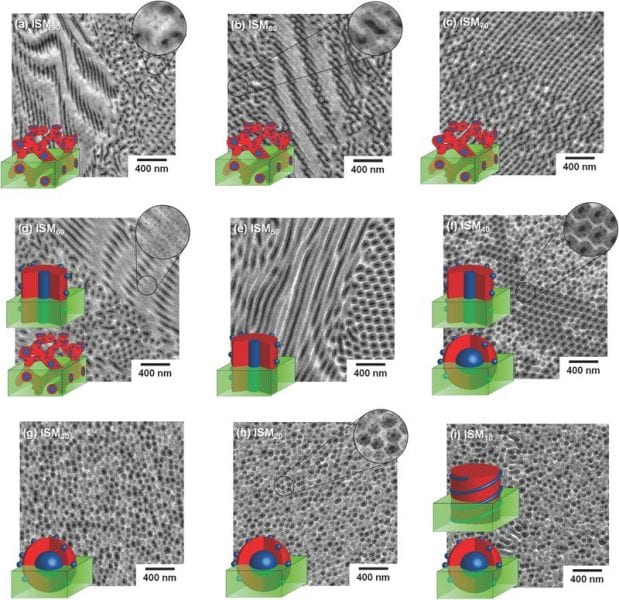

Abetz Volker and his team demonstrate how complex nanostructures can be achieved by polymer blending.

A new study introduces an innovative and cost-effective technique for the plasma functionalization of POSS micro-powders without damaging the nanocage structure they are based on.
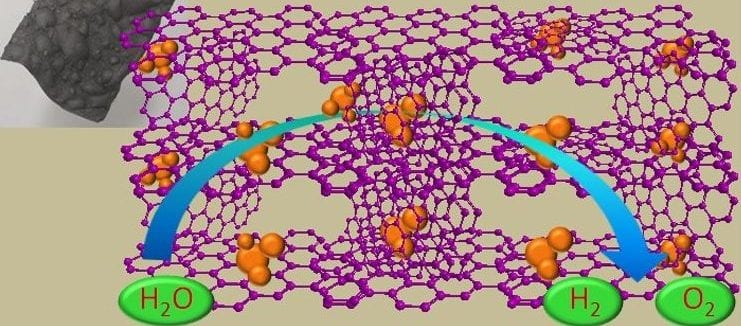
A composite composed of cobalt/cobalt oxide nanoparticles embedded in free-standing reduced graphene oxide (Co/Co3O4-Gr) has been developed for complete water splitting.
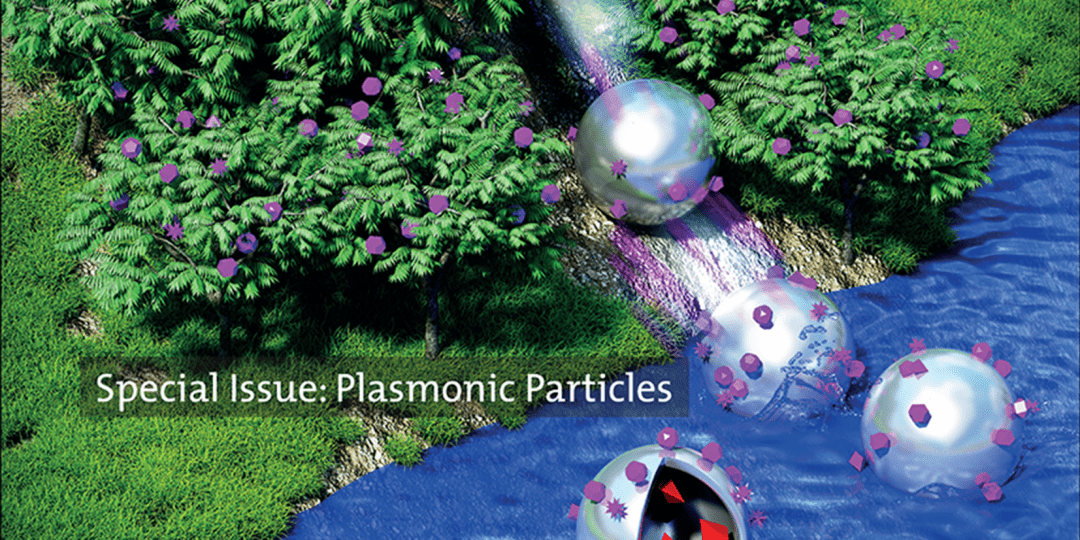
Guest editors Yugang Sun and Zhiyong Tang outline current research directions in the field of plasmonic particles.
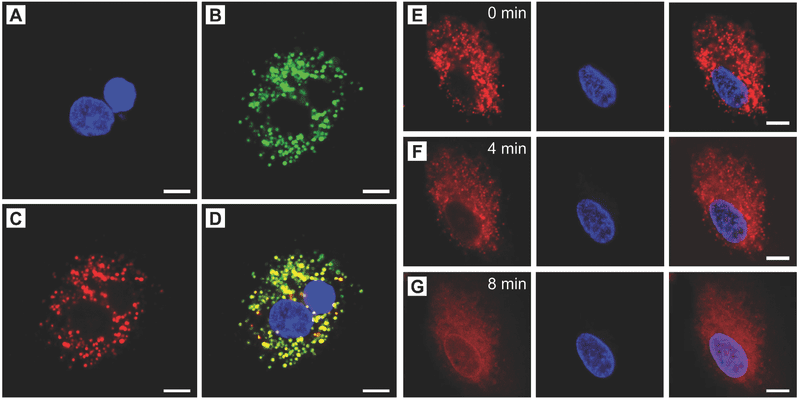
Natural fatty acid eutetic mixtures offer an inexpensive, chemically stable and biocompatible gating material alternative for NIR-triggered drug release nanoparticles for cancer therapy.

A new type of hybrid hydrogel for tissue regenerative therapy—Anisogel—is developed by Abdolrahman Omidinia-Anarkoli, Laura De Laporte, and co-workers from the Leibniz Institute for Interactive Materials in Aachen, Germany. This low-invasive hydrogel is promising for healing body tissues that consist of an aligned architecture, such as the heart, kidney, muscles, and nerves.
Ammps, a new cost-effective, sensitive and non-invasive clinical assay, for the detection and monitoring of bladder cancer.
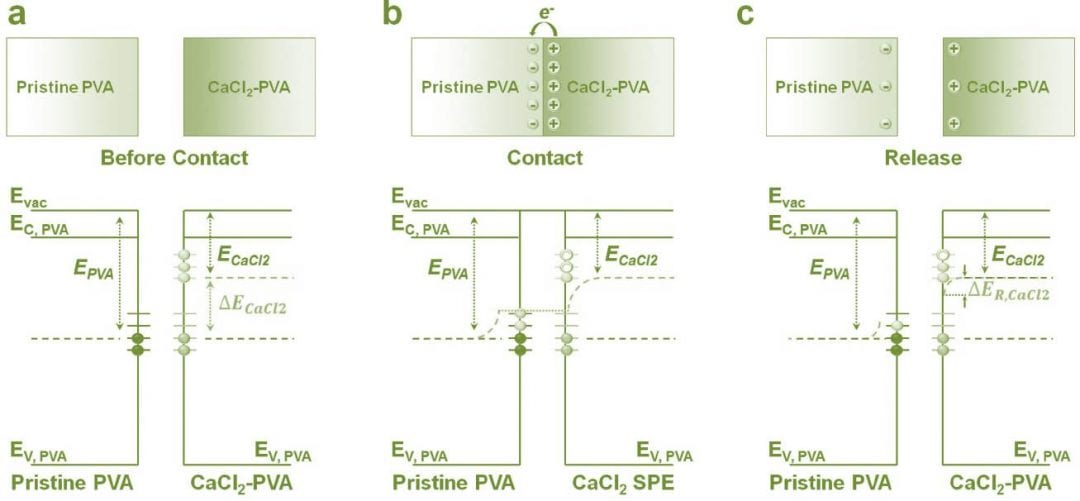
Triboelectric nanogenerators are an exciting frontier in small-scale applications, converting low-frequency mechanical energy into an alternating current.
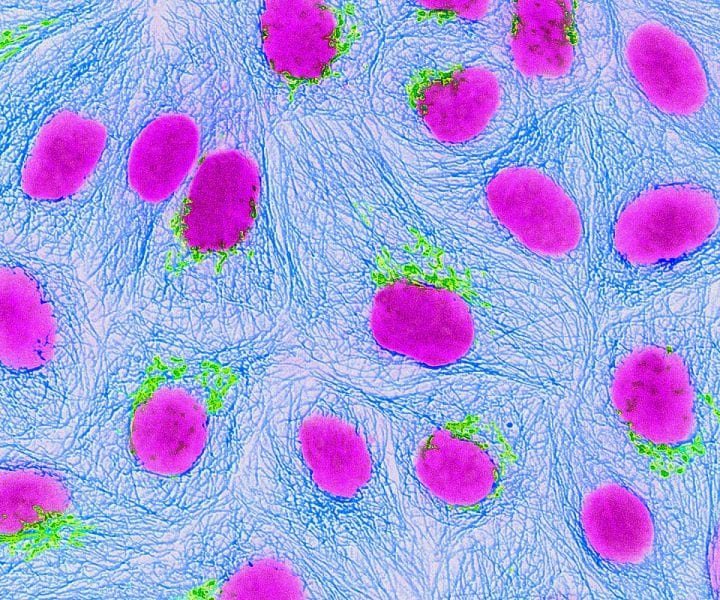
Magnetogenetics is a promising approach manipulating cellular functions in tissues and organisms with high spatial and temporal resolution.

This years’ EUROMAT2017 conference took place in Thessaloniki, Greece, 17-22 September.
 New theory suggests gravity is not a fundamental force
 French WEST reactor breaks record in nuclear fusion
 Quantum entanglement visualized for the first time ever
 Higgs boson may be driving the Universe’s expansion
 An anti-inflammatory peptide may hold the key to low-back pain relief
 Could a nuclear explosion set Earth’s atmosphere on fire?
 Black hole images deliver a deathblow to alternative theory of gravity
 The Road to Better Presentation of Data: The Do’s and Don’ts
 The dramatic story behind general relativity’s Nobel Prize snub
 New study reveals surprising impact of screen time on the developing brain