
Nanoparticles can cross the blood-brain barrier and send a significantly increased level of AZTTP to HIV-infected cells.
Results for "brain"

Microtransistor will improve study of the human brain
French scientists have produced the world’s first microscopic, organic transistors that can amplify and record signals from within the brain itself.
Ultrathin optoelectronics help researchers explore the brain
Ultrathin, flexible optoelectronic devices – including LEDs the size of individual neurons – are lighting the way for scientists in optogenetics and beyond.
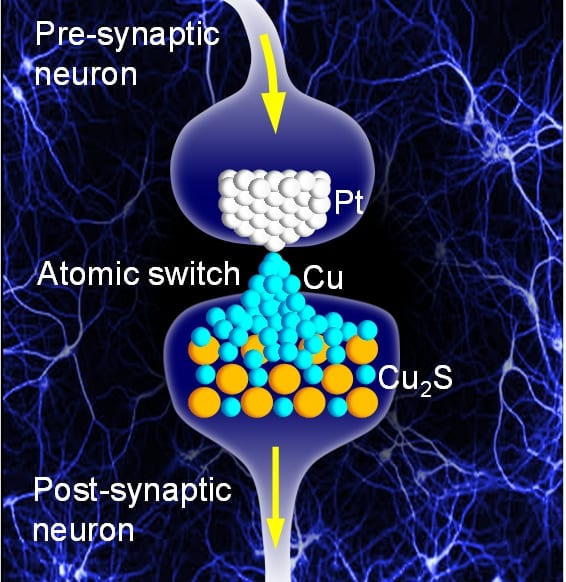
Building Artificial Brains: Nanotechology to Mimic Synapses
A new nanodevice has been developed, intended to reproduce the behaviour of a human synapse.
Stain Your Brain: Nanoparticles Enable Brain Surgery
Researchers at the University of Michigan have developed a new system that uses dye-loaded nanoparticles to tag brain tumors for removal.
Flexible oxide membranes could power the next wave of electronics
Adhering complex oxide membranes onto metallic TiN-coated polymers enables flexible electronics.
Digital twins allow virtual clinical trials of psychedelics for disorders of consciousness
Scientists develop novel brain computational models to explore possible treatment benefits of psychedelics in disorders of consciousness.

Microplastics in gastric tissue: A newly discovered risk factor for cancer development?
For the first time, scientists have detected microplastics in cancerous gastric tissue.

Haitham Amal: targeting autism spectrum disorder, Alzheimer’s disease, and glioblastoma with small-molecule drugs
With FDA orphan drug approval secured, Amal and his team are preparing for phase 1 clinical trials of their small-molecule drugs in 2026.

Machine learning identifies anti-aging neuroprotective treatments
The effects of aging on the human brain could be slowed down with the help of artificial intelligence.

Popular
-
 Micron-sized hidden dimensions could solve two of physics’ deepest puzzles
-
 Turning Periods into Power: Menstrual Blood a Valuable Resource for Medical Diagnostics
-
 Surfactants Steer Supraparticle Structure
-
 Bone loss in obesity traced to gut microbiota
-
 Edible electronics realize safe, complex monitoring devices
-
 Fermilab Confirms Muon g-2 Measurements